

Book Summary
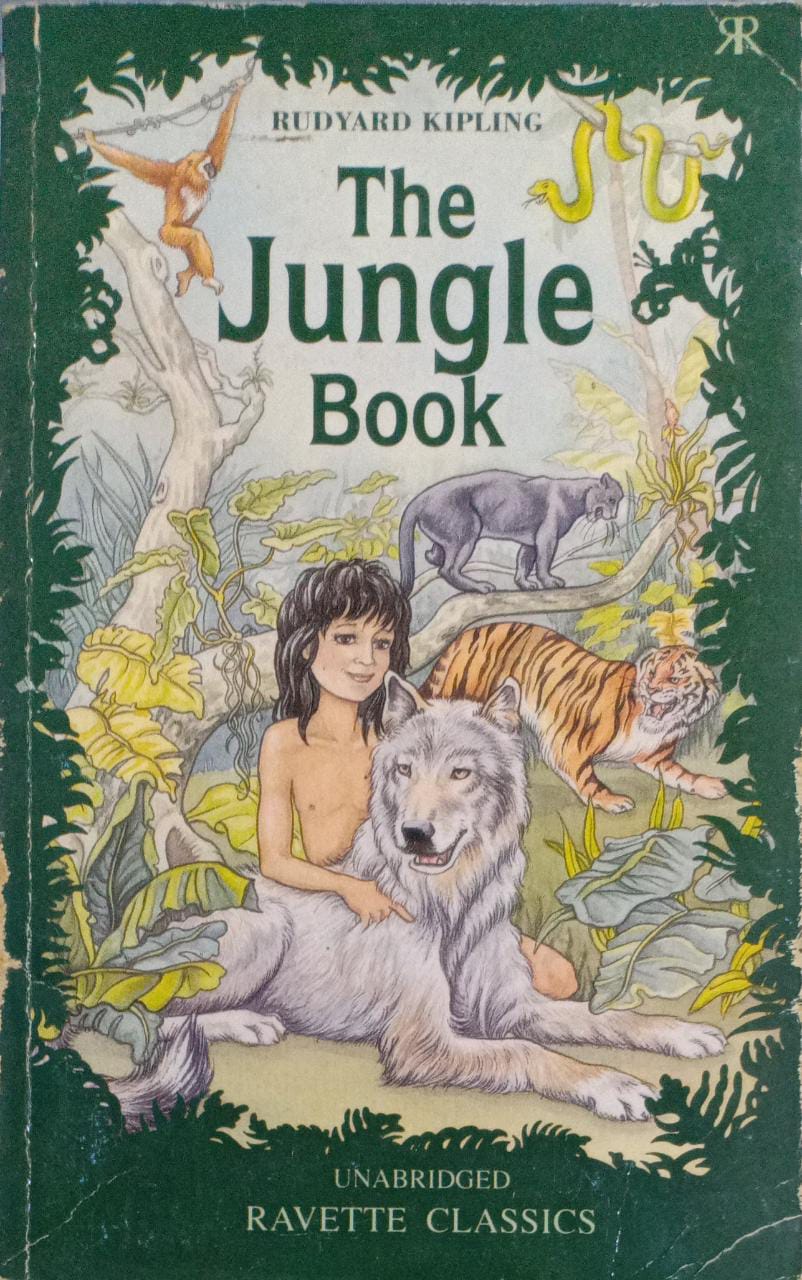
The Jungle Book is a classic collection of stories by Rudyard Kipling, centered around Mowgli, a boy raised by wolves in the Indian jungle. The book follows Mowgli’s adventures as he learns the ways of the wild, guided by his animal mentors—Baloo the bear, Bagheera the panther, and Kaa the python. He also faces threats, particularly from the fierce tiger Shere Khan, who believes Mowgli doesn’t belong in the jungle. Alongside Mowgli’s tale, the book includes other stories featuring animal characters like Rikki-Tikki-Tavi, a brave mongoose, and Kotick, a rare white seal. Blending adventure, moral lessons, and themes of identity and belonging, The Jungle Book has enchanted readers of all ages since its publication in 1894.
About the Author:
Rudyard Kipling (1865–1936) was a British author, poet, and journalist, best known for his works set in British-ruled India. Born in Bombay (now Mumbai), Kipling spent his early childhood in India before being educated in England. His experiences in both countries deeply influenced his writing. Kipling became one of the most popular writers of his time, known for his vivid storytelling, use of folklore, and exploration of colonial themes. In 1907, he became the first English-language writer to receive the Nobel Prize in Literature. Though celebrated for books like The Jungle Book, Kim, and his poems such as If—, Kipling’s legacy remains complex due to his imperialist views, which are often debated alongside his literary contributions.

![Ikigai [Hardcover] by Francesc Miralles |Hectar Garcia](http://bestofusedbooks.com/cdn/shop/products/IKIGAI.jpg?v=1673343840&width=533)