
Book Summary –
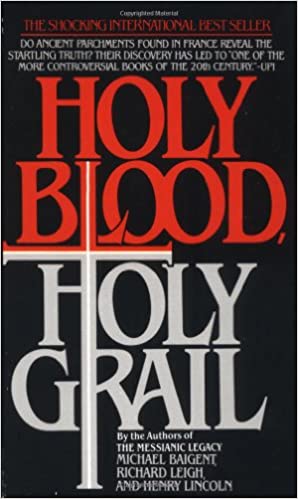
Holy Blood, Holy Grail is a speculative historical book that explores the idea that Jesus Christ may have survived the crucifixion, married Mary Magdalene, and fathered children whose descendants later merged with French nobility, forming a secret bloodline. The authors argue that this lineage was protected for centuries by a secret society known as the Priory of Sion. Through historical analysis, myth, and conjecture, the book links this alleged bloodline to the Merovingian dynasty and posits that various symbols, legends (like the Holy Grail), and even organizations such as the Knights Templar were all part of this hidden narrative. While Holy Blood, Holy Grail has been influential and controversial, it has also faced strong criticism from historians for its speculative approach and lack of academic rigor.
About the Authors:
Michael Baigent (1948–2013) was a New Zealand-born writer and researcher with a background in comparative religion and philosophy. Richard Leigh (1943–2007) was an American author and scholar who contributed to several works on religious and historical mysteries. Henry Lincoln (1930–2022) was a British author, television presenter, and screenwriter who originally investigated the mysteries of Rennes-le-Château in a BBC documentary, which later inspired this book. Together, the three authors combined investigative journalism, historical research, and speculative theory to craft a provocative alternative history that captured public imagination and influenced later works, most notably Dan Brown’s The Da Vinci Code.
![Ikigai [Hardcover] by Francesc Miralles |Hectar Garcia](http://bestofusedbooks.com/cdn/shop/products/IKIGAI.jpg?v=1673343840&width=533)