

Book Summary:
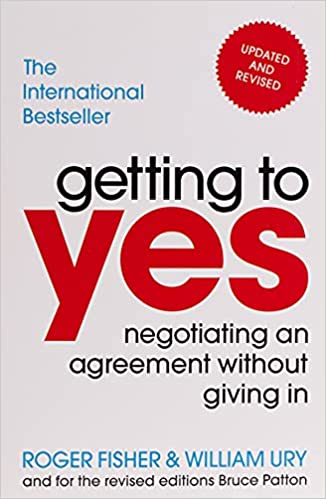
Getting to Yes: Negotiating Agreement Without Giving In by Roger Fisher and William Ury is a landmark book on negotiation that introduces the method of “principled negotiation.” Instead of focusing on positional bargaining—where each side argues for its stance—the authors present a strategy based on four key principles: separate the people from the problem, focus on interests not positions, generate options for mutual gain, and insist on using objective criteria. The book emphasizes fair, effective, and collaborative solutions, showing readers how to resolve conflicts without damaging relationships. It also addresses difficult situations, such as dealing with people who refuse to cooperate or who use unfair tactics. Widely used in business, diplomacy, and everyday life, the book is a practical guide to achieving win–win outcomes through clarity, empathy, and creativity.
About the Authors:
Roger Fisher (1922–2012) was a professor at Harvard Law School and a pioneer in the field of negotiation and conflict resolution. He co-founded the Harvard Negotiation Project, which focused on developing effective methods of negotiation for complex disputes worldwide. William Ury is a negotiation expert, mediator, and co-founder of the Harvard Negotiation Project. With a background in anthropology and conflict resolution, Ury has advised governments, corporations, and organizations on high-stakes negotiations across the globe. Together, Fisher and Ury brought negotiation science into the mainstream, and their book Getting to Yes remains one of the most influential works in the field, shaping how individuals and institutions approach conflict resolution and collaboration.
![Ikigai [Hardcover] by Francesc Miralles |Hectar Garcia](http://bestofusedbooks.com/cdn/shop/products/IKIGAI.jpg?v=1673343840&width=533)