

Book Summary –
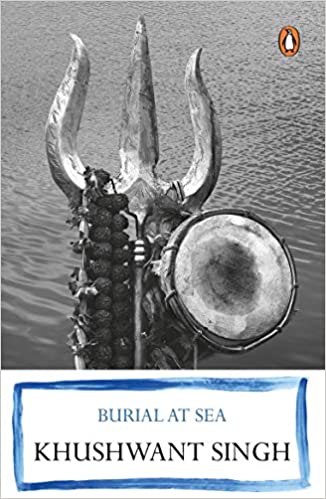
Burial at Sea is a semi-autobiographical novel that blends history, personal memory, and fiction to explore India’s freedom struggle through an intimate lens. The story follows Mohan Kumar, a man who becomes entangled in the nationalist movement, interacting with prominent political figures and witnessing key events leading up to India’s independence. As Mohan navigates political intrigue and personal relationships, the narrative highlights the complexities, contradictions, and moral dilemmas within the fight for freedom. The title metaphorically reflects death, farewell, and the letting go of both personal burdens and a colonial past. Singh uses sharp wit, vivid detail, and emotional depth to show how ordinary individuals were swept into the tides of history, making the novel a blend of political commentary and human drama.
About the Author –
Khushwant Singh (1915–2014) was one of India’s most celebrated writers, journalists, and public intellectuals, known for his incisive humor, bold opinions, and accessible storytelling. A lawyer by training and a prolific author, Singh wrote iconic works such as Train to Pakistan, Delhi, and numerous essays and memoirs that captured India’s social and political landscapes with nuance and candor. His writing often blended history with personal insight, marked by clarity, irony, and emotional honesty. Beyond literature, he had a distinguished career in journalism, politics, and diplomacy. In Burial at Sea, like in much of his work, Singh drew from personal experience and historical understanding, offering readers a vivid, human-centered view of India’s turbulent path to independence.
![Ikigai [Hardcover] by Francesc Miralles |Hectar Garcia](http://bestofusedbooks.com/cdn/shop/products/IKIGAI.jpg?v=1673343840&width=533)